



Why the Omega Speedmaster “Moonwatch” is a Permanent Classic
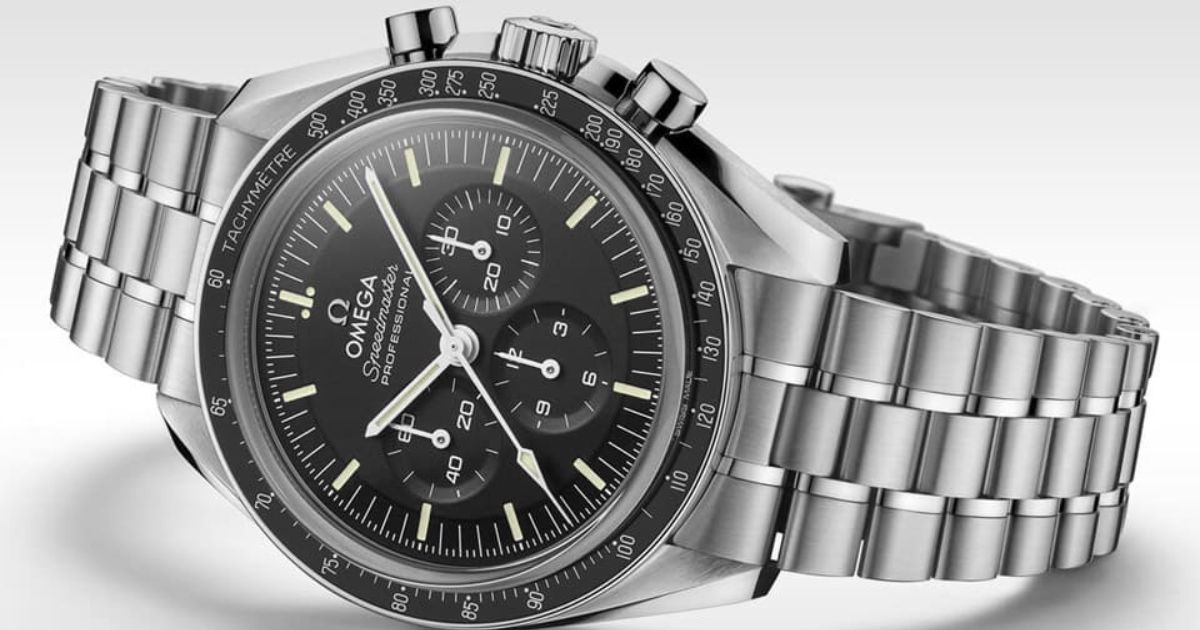
In the ever-evolving landscape of luxury watchmaking, where trends flicker and complications grow ever more dizzying, one timepiece stands as a monolith of timeless relevance: the Omega Speedmaster Professional “Moonwatch.” It is more than a watch; it is a narrative on the wrist, a triumph of engineering, and a design study in purposeful perfection. While countless watches are deemed “iconic,” the Speedmaster’s status as a permanent classic is uniquely earned, cemented not in the salons of Geneva but in the dust of the lunar Sea of Tranquility. For the discerning collector and the curious learner, understanding why requires delving into history, design, and an almost mythical provenance.
The Genesis: A Purpose-Born Instrument
Our story begins not with space, but with speed. Launched in 1957 as part of Omega’s revolutionary “Professional” trilogy, the Speedmaster was conceived as a robust chronograph for motorsports and scientific pursuits. Its core DNA was established from the outset: a black tachymeter bezel, clear legible registers (the classic tri-compax layout), and a stainless steel case built for durability. The symmetrical, sans-serif fonts and the crisp, dauphine-style hands spoke of function. This was a tool watch in its purest form, designed for precise measurement in demanding conditions. Its robustness and legibility, however, would soon attract attention from a far more extreme environment.
The “Right Stuff”: Winning the Ultimate Test
The 1960s space race was the ultimate proving ground, and NASA, in its pragmatism, subjected chronographs from several brands to a brutal battery of tests. The trials were merciless: extreme temperatures, vacuum, humidity, shock, corrosion, and sound pressure. Only one watch emerged operational: the Omega Speedmaster Reference 105.003. In 1965, it was officially “Flight-Qualified for All Manned Space Missions.” This was no marketing endorsement; it was a certification earned through mechanical grit.
History then delivered its defining moments. In 1965, during the Gemini 4 mission, Ed White performed America’s first spacewalk, a Speedmaster strapped over his spacesuit—the first Omega in space. In 1969, the Speedmaster became the first watch worn on the moon during the Apollo 11 mission, earning its eternal “Moonwatch” moniker. Its most heroic chapter came in 1970 during the ill-fated Apollo 13 mission. After an explosion crippled the spacecraft, the crew used their Speedmaster’s chronograph to time the critical 14-second engine burn for re-entry trajectory, a maneuver performed with astonishing precision under unimaginable stress. Omega received NASA’s “Snoopy Award” for its role in saving the crew, a story that elevates the watch from instrument to legend.
Design: The Anatomy of a Classic
Beyond history, the Moonwatch’s design is a masterclass in enduring aesthetics. Its beauty is derived entirely from its purpose, adhering to the principle that form follows function.
- The Case and Crystal: The asymmetrical case is a signature, designed to protect the pushers and crown. The use of a Hesalite (acrylic) crystal is deliberate—it can shatter but not shatter into loose fragments, a critical safety feature in a sealed spacecraft environment. The warmth and slight distortion of Hesalite are beloved characteristics.
- The Dial and Legibility: The matte black dial is a void against which the luminous, skeletal hands and applied indexes shine. The ladder-style chronograph seconds hand and the distinct sub-dial shapes allow for instant, error-free reading. Every element exists to convey information clearly.
- The Bezel: The anodized aluminum tachymeter bezel is fixed, a tool for calculations. Its black-on-white scale is simple, highly legible, and has remained virtually unchanged.
- The Movement: The heart is the manually-wound Calibre 321 (and later 861/1861). This was a strategic choice: manual movements are simpler, more reliable, and easier to repair than automatics of the era, with no rotor to be affected by zero gravity. The ritual of winding connects the wearer to the mechanism daily.
This design has been refined, not reinvented. Modern “Master Chronometer” versions offer co-axial escapements and anti-magnetic mastery, yet they retain the essential visual code. This design continuity is key to its classic status; a 1965 model and a 2024 model are unmistakably kin.
The Cultural Orbit: From Astronauts to Everyday Icons
The Speedmaster transcended its technical role to become a cultural symbol. It was the watch of explorers, of the individuals who pushed humanity’s boundaries. This association with heroism, exploration, and human ingenuity is powerful and enduring. Unlike watches associated solely with luxury or status, the Speedmaster carries a story of collective achievement. It is equally at home on the wrist of an engineer, an artist, or a collector—its narrative is universal.
Furthermore, it exists in a sweet spot of versatility. On its original steel bracelet or a weathered leather strap, it transitions seamlessly from a casual weekend look to a formal setting. Its 42mm case (historically 42mm but wearing slightly smaller due to the lugs) is timeless in proportion.
The Learner’s Perspective: A Gateway to Horology
For those entering the world of watches, the Moonwatch is an invaluable educational piece. It teaches core concepts:
- The Chronograph Complication: Its operation is intuitive, a perfect introduction to mechanical complexity.
- Manual-Winding Mechanics: It fosters a tangible connection to the movement’s energy and history.
- Tool Watch Philosophy: It exemplifies design where every element has a raison d’être.
- Horological History: Wearing it is a direct link to the 20th century’s greatest technological and exploratory endeavors.
A Legacy Unmatched
The Omega Speedmaster Moonwatch is a permanent classic because it is immutable in its essence. It is not defined by precious metals, avant-garde design, or fleeting fashion. Its value is built on a trinity of pillars: a flawless, functional design that has aged with grace; a historically verified, unparalleled provenance of human adventure; and a mechanical integrity that was literally life-saving.
It represents a moment in time when mankind reached for another world, and on its wrist was a simple, robust, and perfectly designed instrument. That story, crystallized in steel and Hesalite, will never grow old. It is a chapter of our history, ticking on, forever reminding us that the greatest classics are those born not just to tell time, but to witness history.